What Actually Makes a Trip Tax Deductible?
The Problem
Many entrepreneurs assume that simply traveling while owning a business makes the trip tax deductible.
Unfortunately, that's not how it works.
Business travel deductions are based on the primary purpose of the trip, proper documentation, and organized recordkeeping.
Without those elements, what seems like a legitimate business expense can quickly become an audit risk.
Many business owners accidentally create problems by mixing personal and business expenses, failing to keep receipts, or not documenting the business purpose of their travel.
The good news is that with the right systems in place, business travel can be both productive and tax compliant.
The Direct Answer
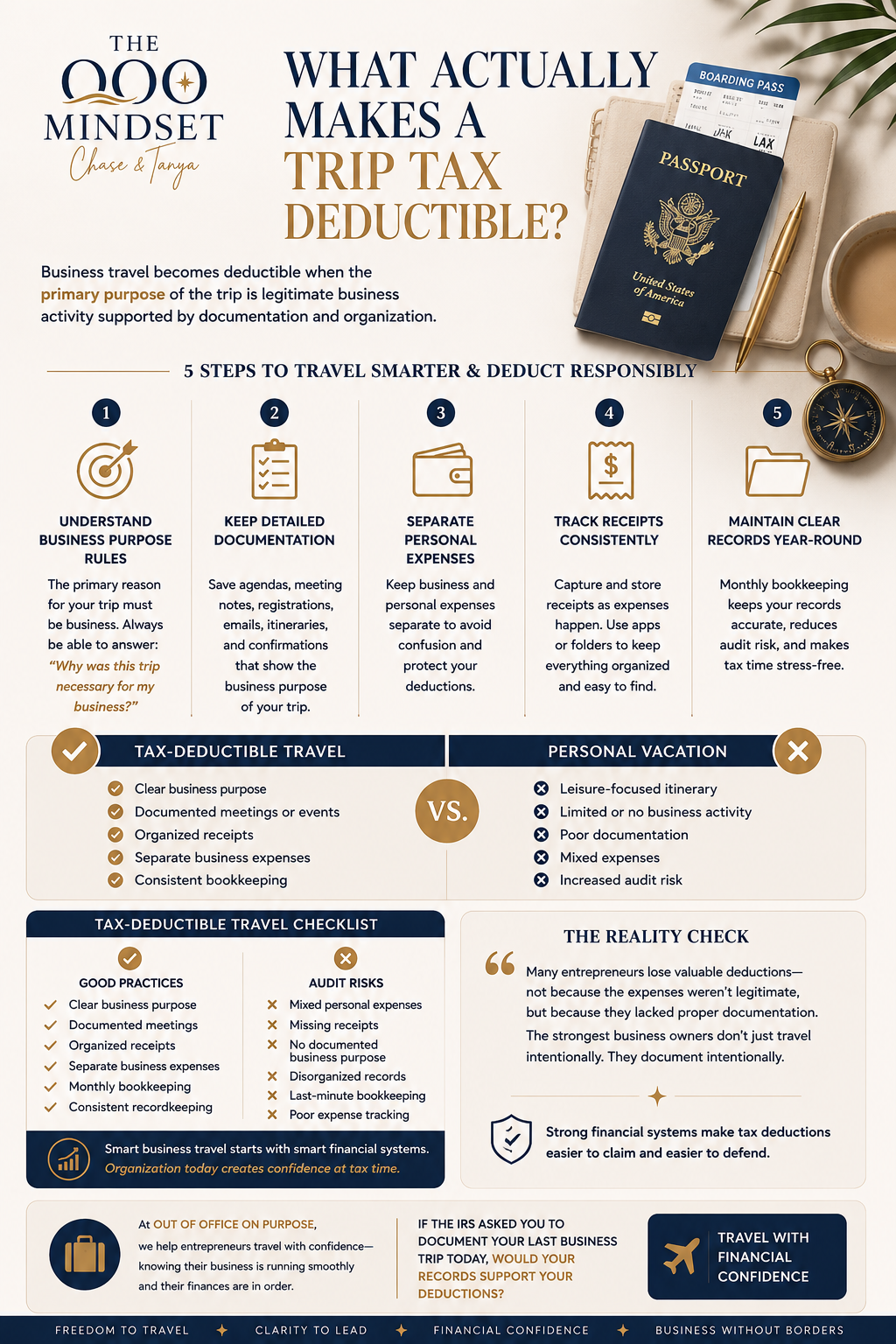
A trip becomes tax deductible when its primary purpose is legitimate business activity and you maintain proper documentation to support your expenses.
The IRS expects business owners to show:
a clear business purpose
organized documentation
accurate expense tracking
separation of business and personal expenses
consistent recordkeeping
The deduction isn't determined by where you travel.
It's determined by why you traveled and how well you documented it.
The How-To Steps
1. Understand the Business Purpose Rules
The primary reason for your trip must be business.
Examples include:
meeting with clients
attending conferences
networking events
business education
site visits
vendor meetings
strategic planning retreats
If the primary purpose is personal vacation, most travel expenses are not deductible.
Always be able to answer one simple question:
"Why was this trip necessary for my business?"
2. Keep Detailed Documentation
Documentation protects your deductions.
Maintain records such as:
conference registrations
meeting agendas
event tickets
client meeting notes
business emails
hotel confirmations
flight itineraries
calendars showing business activities
The more organized your documentation, the easier it is to support your deductions if questions arise later.
3. Separate Personal Expenses
Mixing personal and business spending creates unnecessary confusion.
Business expenses may include:
airfare for business travel
lodging during business activities
rideshare or transportation
conference fees
business meals (when applicable)
Personal shopping, family entertainment, and vacation activities generally are not deductible.
Keeping separate business accounts and credit cards makes this process much easier.
4. Track Receipts Consistently
Don't wait until you get home.
Capture receipts as expenses happen.
Use digital storage, expense tracking apps, or organized folders to save:
meals
transportation
lodging
parking
baggage fees
conference expenses
Consistent receipt tracking reduces stress and improves bookkeeping accuracy.
5. Maintain Clear Records Year-Round
Travel deductions become much easier when bookkeeping is updated regularly.
Monthly bookkeeping helps business owners:
categorize expenses correctly
identify missing receipts
maintain accurate financial reports
prepare for tax season
reduce audit risk
Organization throughout the year is far easier than trying to reconstruct expenses months later.
Tax-Deductible Travel vs. Personal Vacation
Tax-Deductible Travel
Clear business purpose
Documented meetings or events
Organized receipts
Separate business expenses
Consistent bookkeeping
Personal Vacation
Leisure-focused itinerary
Limited or no business activity
Poor documentation
Mixed expenses
Increased audit risk
The Reality Check
Many entrepreneurs lose valuable deductions—not because the expenses weren't legitimate, but because they lacked proper documentation.
Poor organization often creates more tax problems than the travel itself.
The strongest business owners don't just travel intentionally.
They document intentionally.
Strong financial systems make tax deductions easier to claim and easier to defend.
Ready to Travel With Confidence?
At Out of Office On Purpose, we believe business travel should create both opportunity and peace of mind.
Through organized financial systems and proactive planning with Emerald Tax & Accounting, entrepreneurs can travel confidently while maintaining accurate records, reducing audit risk, and maximizing legitimate deductions.
Because the best business trips don't just create memories.
They create measurable value for your business.
