Business Travel Red Flags: What to Avoid to Stay Compliant
The Problem: Small Travel Mistakes Can Become Big Tax Problems
Business travel can help you grow your business, build relationships, and create new opportunities. It can also provide valuable tax deductions when handled correctly.
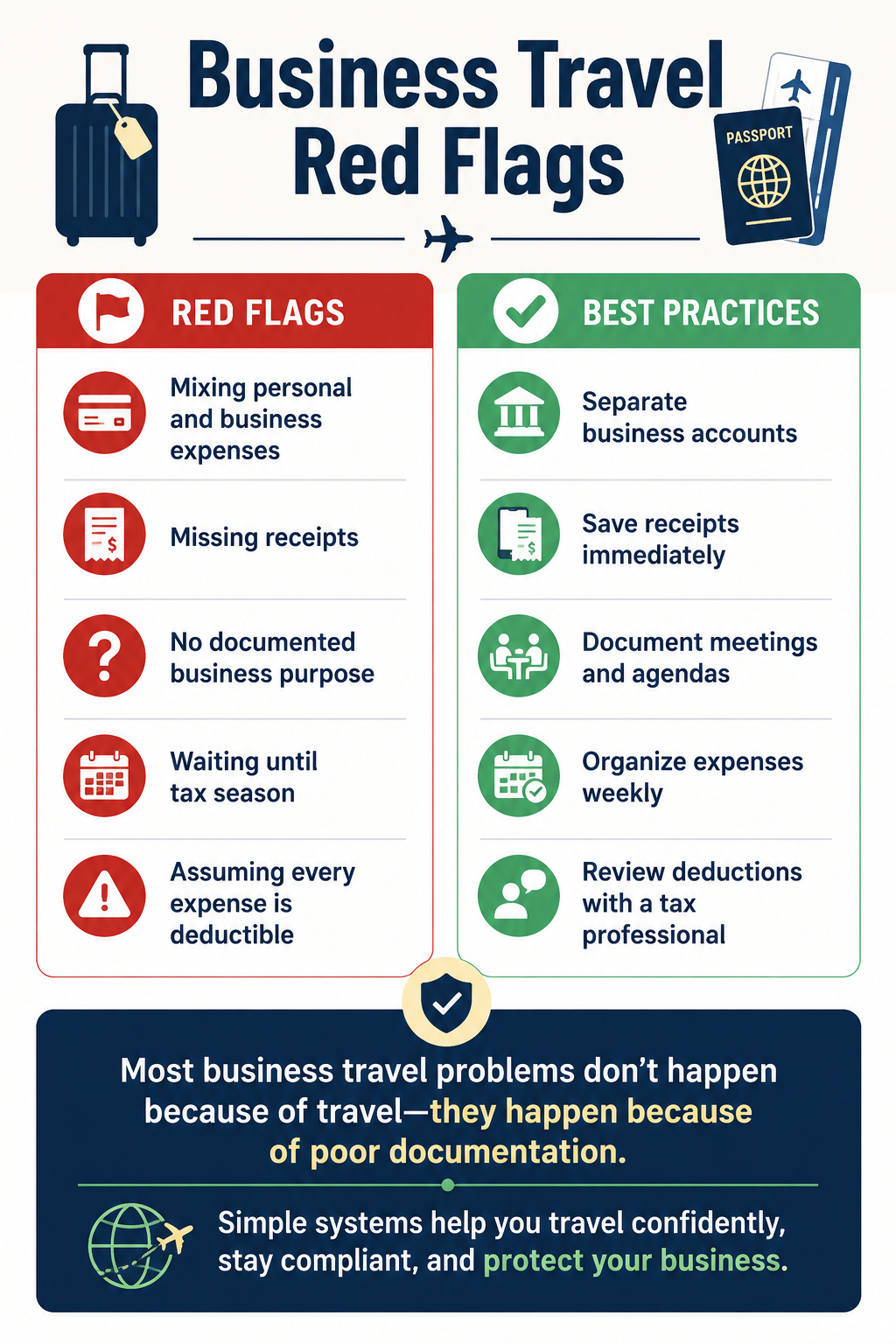
The problem is that many entrepreneurs accidentally create compliance issues by failing to document their trips, mixing personal and business expenses, or waiting until tax season to organize everything.
Most travel-related tax issues aren't caused by fraud—they're caused by disorganization.
The good news is that a few simple habits can help you avoid these common mistakes.
Direct Answer
The biggest business travel red flags are poor documentation, mixed expenses, missing receipts, and assuming every travel expense qualifies as a business deduction.
Staying compliant doesn't require complicated systems. It requires consistency before, during, and after every trip.
When your records clearly show the business purpose of your travel, you can enjoy the benefits of business travel with confidence.
Five Business Travel Red Flags to Avoid
1. Mixing Business and Personal Expenses
Using one credit card for everything makes bookkeeping difficult and creates unnecessary questions if your records are ever reviewed.
Instead:
Use a dedicated business credit card.
Keep personal purchases separate.
Pay for business expenses from your business account.
2. Failing to Keep Receipts
Receipts are one of the easiest ways to support your deductions.
Save receipts for:
Airfare
Hotels
Rental cars
Parking
Tolls
Business meals
Conference registration
Ride-share services
Internet or workspace fees
A digital receipt app can make this process simple and keep everything organized.
3. Not Documenting the Business Purpose
Every trip should have a clear business reason.
Examples include:
Meeting with clients
Attending conferences
Networking events
Visiting vendors
Business planning sessions
Educational workshops
Keep meeting agendas, calendar events, emails, and conference schedules as supporting documentation.
4. Waiting Until Tax Season
Trying to remember travel details months later often leads to missing information.
Instead:
Upload receipts daily.
Review expenses weekly.
Organize records monthly.
Store everything in one secure location.
Small habits prevent big headaches.
5. Assuming Every Expense Is Deductible
Not every expense during a business trip automatically qualifies as a business deduction.
Expenses that often require extra consideration include:
Family travel
Vacation days added to business trips
Entertainment expenses
Luxury upgrades
Personal shopping
When you're unsure, ask your tax professional before claiming the deduction.
Reactive Travel vs. Strategic Business Travel
Reactive Travel
Mixes personal and business expenses
Loses or forgets receipts
Doesn't document meetings or business activities
Waits until tax season to organize records
Guesses what is deductible
Keeps scattered or incomplete records
Strategic Business Travel
Uses separate business accounts and credit cards
Saves receipts digitally throughout the trip
Documents meetings, agendas, and business purpose
Tracks expenses as they happen
Understands which expenses qualify as deductions
Maintains organized, audit-ready records
The difference isn't how often you travel—it's how intentionally you prepare, document, and manage each trip.
Reality Check
Most business travel deductions aren't denied because business owners intentionally did something wrong.
They're denied because there isn't enough documentation to support the expense.
The IRS wants clear records that show why the trip was necessary for your business. Building good habits now can save you time, stress, and money later.
Organization is one of the best forms of protection.
Final Thoughts
Business travel should create opportunities—not unnecessary tax concerns.
Whether you're attending a conference, meeting clients, or taking a working retreat, organized records help you travel with confidence and stay compliant.
At Out of Office On Purpose, we believe that freedom comes from having the right systems in place before you leave home.
Are your business travel habits helping protect your business—or creating unnecessary risk?
